Category Archives: Better world

Strengths & weaknesses

Taken from Paco Olvera Monterd's photostream on Flickr (https://www.flickr.com/photos/monterd/)For quite a few of us, one of the phenomena returning each year at work, mainly in December and January, are yearly appraisals, evaluations, or whatever you want to call them (hint: if you want to give the impression of knowing something about the topic, use the term 360° in the description). If you’ve ever come across a person who feels comfortable beginning these (either from the side of the interviewed or from the side of the interviewer, for that matter), do let me know, as it would no doubt be great to get to know such an exceptional person.

In a lot of companies, some kind of form is provided by the HR department Continue reading

Is it wise (and healthy) to buy generic medicine?

Picture taken from hitthatswitch's Photostream on Flickr (https://www.flickr.com/photos/ringai/)As consumers we are being offered, in an increasing number of domains, the choice between ‘big brand’ products and store brands or ‘white labels’. A nice way to save some money, right? Especially since more and more research is showing that the quality is very much comparable (if not completely the same, or at least being manufactured in the same production facilities), why not choose the cheaper alternative for everyday products such as milk or paper tissues?


But if your health is at stake, things might be a bit different Continue reading

Quote of the day #29

“This is a very important debate for the decades ahead. The public debt (which is much smaller than total private wealth and perhaps not really that difficult to eliminate) is not our major worry. The more urgent need is to increase our educational capital and prevent the degradation of our natural capital. This is a far more serious and difficult challenge, because climate change cannot be eliminated at the stroke of a pen (or with a tax on capital, which comes to the same thing).”

Thomas Piketty in the concluding pages of Capital in the Twenty-First Century
(his 700 page plea for a progressive annual tax on
capital aimed to improve wealth distribution)
Picture cropped from blu-news.org's Photostream on Flickr (https://www.flickr.com/photos/95213174@N08/)

Would you eat a jar of yoghurt 4 days too late?

A gigantic amount of perfectly good food is thrown away for all the wrong reasons. I don’t want to start moralizing about starving children in Africa (although that absolutely remains a huge and definitely solvable problem*), but rather point to the fact that this is also costing most of you money quite directly – as that more easily causes people to start paying attention (sad, but true).
Picture by JaulaDeArdilla

One of the main reasons is that most people keep confusing the labels Best before and Use by. The latter of the two is the one that is most likely to cause life-threatening situations if not respected. Continue reading

If there is indeed a doctor in the house, should you consult her/him?

Obviously: yes. Circumstances where the question “Is there a doctor in the house?” is appropriate suggest a situation characterized by the unexpected appearance, in the presence of a restricted group of people, of events or symptoms that are clearly hinting towards an medical emergency. Of course a medically trained professional is then by far the best option for succesfully solving the problem (and hopefully save a life, or reassure the crowd that is was a false alert, or reprimand anyone whose sense of humor is sick enough to include faking a medical emergency).

Picture by ibmphoto24

The real question I want to raise is this: “Should you consult a physician for all health-related problems – even (and especially) those without events or symptons that are clearly hinting towards an medical emergency?”  Continue reading

E-books are the next big thing. Definitely maybe. Some time.

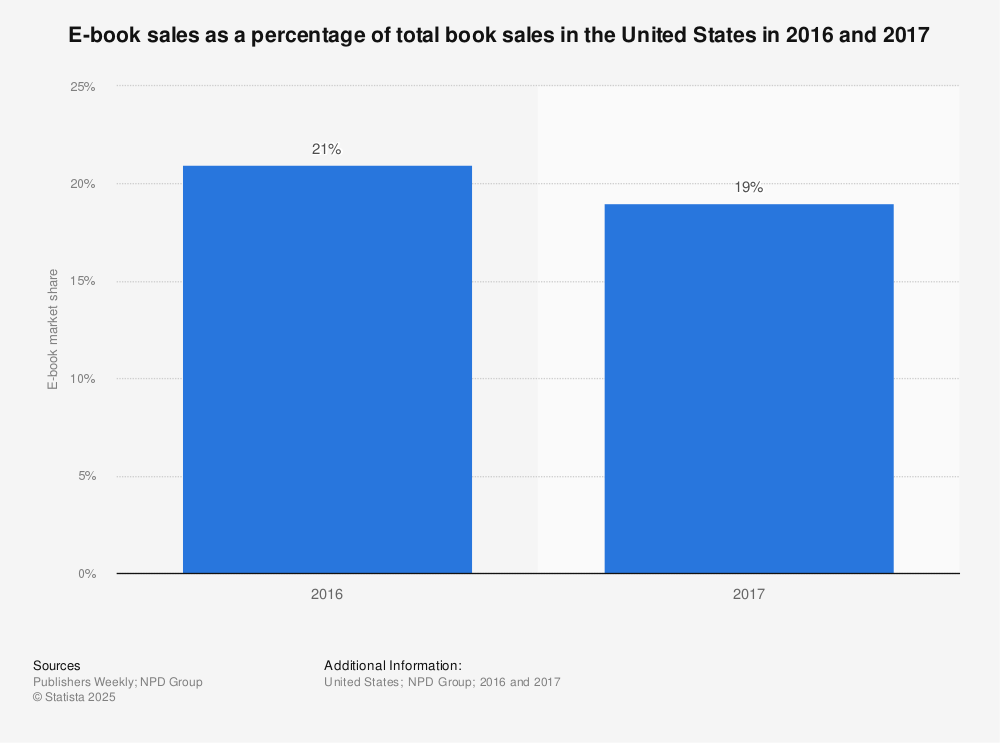
The sarcastic undertone of the title might be a bit weird for US readers of this blogpost, as e-books have quite a substantial market share in the US for a while already, as you can see in the statistic below.

Statistic: E-book sales as a percentage of total book sales in the United States from January 2012 to March 2013 | Statista Statistic provided by Statista

The adoption of e-books in Europe is no where near that level – it’s stuck at something like 1 or 2% in a lot of European countries, Continue reading

Left vs. right in politics

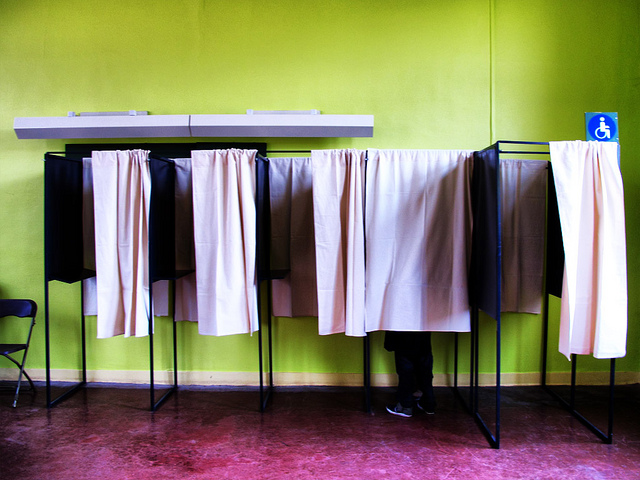
It is sometimes said that the distinction between left and right in political terms is no longer there. Utter nonsense of course. The claim is usually based on the fact that some politicians or political parties that would traditionally be labeled as left on the politcal spectrum might indeed, once they are in a position to make policy, talk or act in a way that is in reality more right (and vice versa of course). But that is really due to the dynamics of politics, not to the underlying values of the person or the political party: those who have risen to power will often go to great lengths to maintain their position, even if this means making deals that are conflicting with what could be considered as their ‘natural’ position on the left/right axis.

Picture by Mortimer62 Continue reading

Suggestions for a slightly better world #3

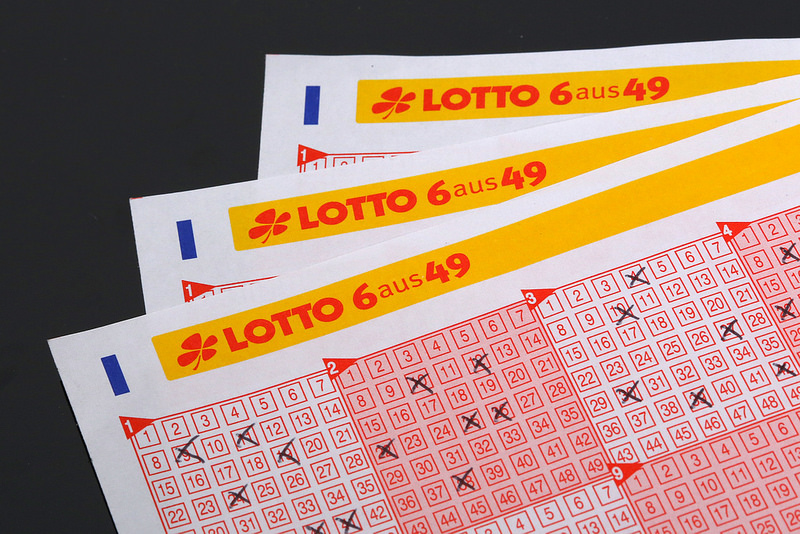
Photo by Tim Reckmann (FotoDB.de)Some people think it’s a good idea to spend money on schemes or systems that promise to improve your chances of winning the lotto or lottery. I can tell you one thing: the only one who is certain to end up with more money is the guy selling the scheme. There simply is no such thing as manipulating chance. Probability calculation is an exact science. Although it might feel a bit counterintuitive, the chance of the winning Continue reading